Travel Planning
Overwhelmed by Trip Planning?
A practical guide for couples and families who want to stop researching and start planning a trip that actually means something
Why Trip Planning Feels So Overwhelming (And Why Tourist Traps Win by Default)
In 2026, the internet is louder than ever. We're buried in reels, "must-do" lists, and itineraries that all look suspiciously the same.
Here's what happens when you're overwhelmed: the obvious stuff becomes the safe choice. Big-name attractions. The tour with 20,000 reviews. The restaurant that's famous online. And sometimes those places are genuinely great. But a lot of the time? They're just loud.
For couples especially, this shows up as decision fatigue. When every destination claims to be authentic and every blog post promises the "real" experience, it gets hard to tell what's actually community-rooted and what's just good marketing. So you keep researching. You keep second-guessing. You keep refreshing.
And suddenly it's 2:17 a.m. and you're reading a forum debate about whether a certain neighborhood has "changed."
The goal isn't to find some perfectly untouched experience. It's to find moments that feel human, mutual, and real and to have a clear enough plan that you can actually be present for them when they happen.
That's where intentional travel planning comes in.
How to Plan Family Travel That Works for Every Age
Traveling as a family adds a whole extra layer to the planning process. You're not just designing a trip, you're trying to find a rhythm that works for multiple ages, multiple attention spans, and multiple definitions of fun.
You want something hands-on enough that younger kids stay engaged. Something with enough autonomy that older kids don't feel like they're on a field trip. And something that still feels meaningful for you, because you're a person too, not just a logistics coordinator.
Then the practical layer piles on. Transportation, pacing, food, downtime, safety. Families often default to more generic trips not because they don't want depth, but because meaningful family travel planning can feel like squeezing a second job into a calendar that's already full.
Here's what I've learned from planning cultural experiences for families: real connection doesn't come from dragging kids through important sights. It comes from choosing the right kind of experience for where they are.
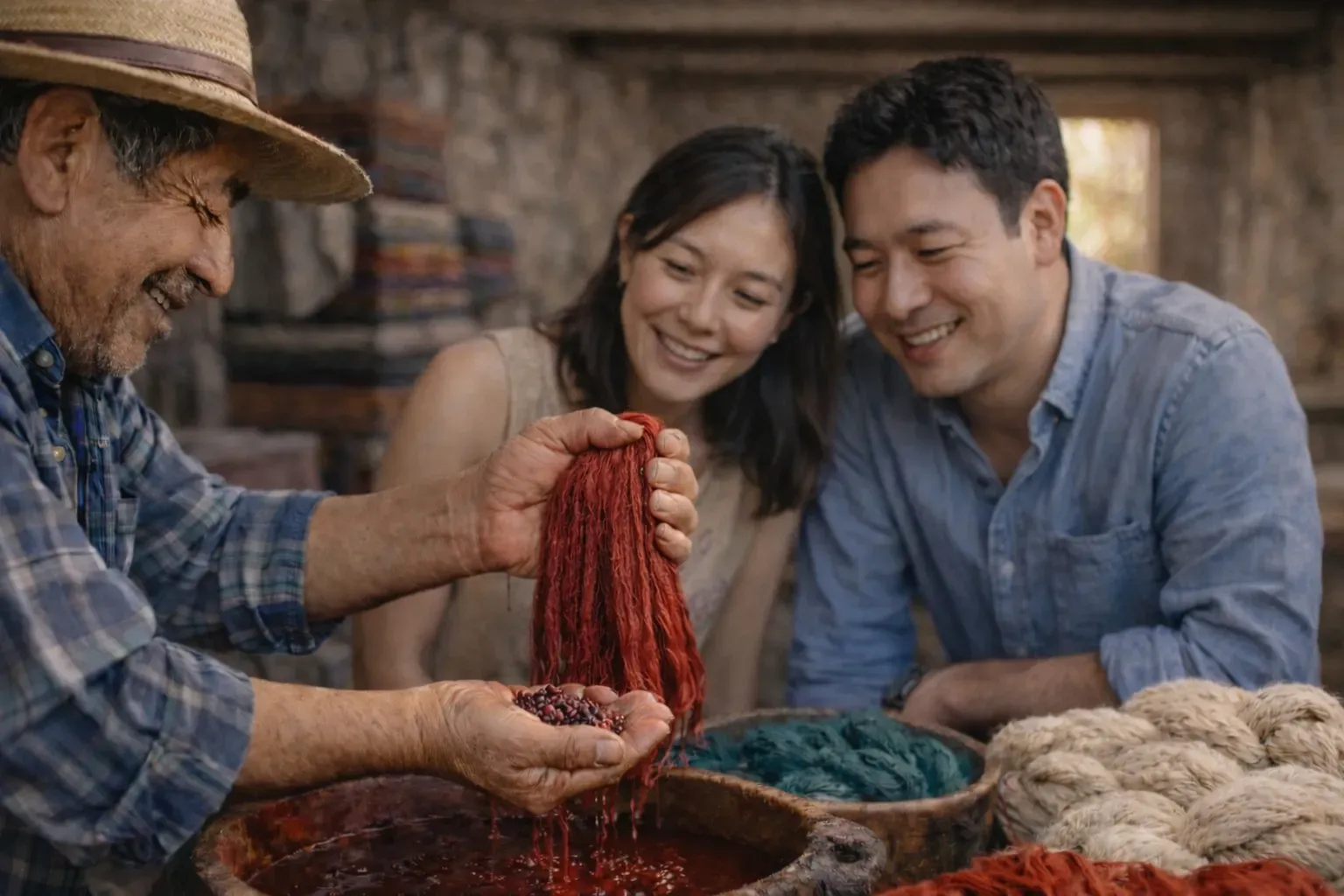
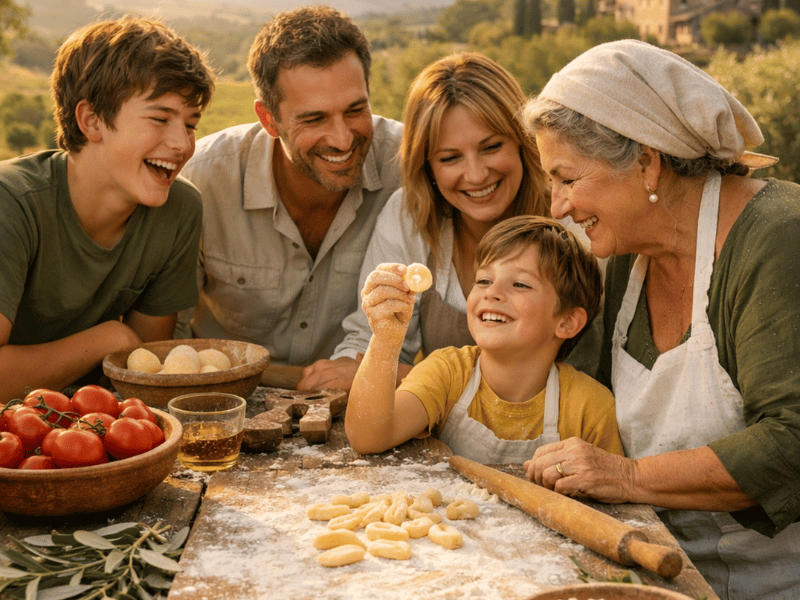
A mask-making workshop in a family-run studio in Thailand. A neighborhood walk in Greece built around stories, snacks, and small discoveries. A cooking lesson where everyone has a role and nobody has to sit still and behave for two straight hours. Those are the experiences that land for kids and for parents.
And watching your teenager actually ask a local artisan a real question? That moment is worth every hour of planning.
What Is Intentional Travel and Why It's Different From Slow Travel
You'll hear "slow travel" everywhere right now. The spirit of it is right but the framing doesn't always fit real life. You might only have 10 to 14 days off. You don't want to waste them. You just want them to matter.
Intentional travel isn't about doing less for the sake of doing less. It's about choosing experiences that create genuine connection and letting go of the ones that are only there to fill a list. That distinction changes everything about how a trip feels.
In practice, intentional travel planning looks like fewer bases so you're not living out of a suitcase every other day. It looks like better timing such as shoulder season mornings, quieter entry points, days that have some breathing room built in. It means working with local guides when they add real context and access, not just narration. And it means building in the small everyday things on purpose: a neighborhood market, a family-run workshop, a café where you sit long enough to actually notice where you are.
The difference is real. Seeing five cities in ten days leaves you with a lot of train station memories. Spending that same time in two places is where you can learn the rhythm, talk to people, and let something surprise you. That's the trip you'll actually remember.
That's what intentional travel planning makes possible. And it's exactly how I build custom itineraries for couples and families.
How a Travel Advisor Helps You Plan a Meaningful Trip (Without the Research Spiral)
So how do you get from the 2 a.m. tab spiral to a trip that actually feels good?
You don't research harder. You change the approach. When couples and families work with me, they're not just getting someone to book things they could technically book themselves. They're working with someone who has traveled through Europe and Asia with the same curiosity and intentionality they're looking for. Someone who has sat in family-run restaurants where nobody spoke the same language, navigated local markets without a tour group, and learned that the best moments usually happen just outside the planned itinerary.
If you're someone who wants to travel with curiosity and a genuine respect for the places and people you visit. That's exactly how I travel. And that's what I bring to every itinerary I build.
That means looking for experiences that are genuinely community-supported — small groups, fair compensation, local ownership, and cultural context that feels real rather than performed. It means building routes and pacing that make sense for how your family or your relationship actually travels. It means locking in what needs to be pre-booked while keeping enough flexibility that the trip still has room to breathe.
The result isn't a perfect trip. Travel is never perfectly controllable and I won't pretend otherwise. What it is, is a thoughtful one planned with care, built around what matters to you, and designed to feel personal from the first day to the last.
The Question That Changes How You Plan a Trip
Checklist travel asks: "What are the top ten sights?"
Intentional travel planning asks: "What kind of moments do we want to have together?"
That shift changes everything. When you plan for connection instead of coverage, you stop chasing the perfect photo and find yourself fully present — just experiencing it.
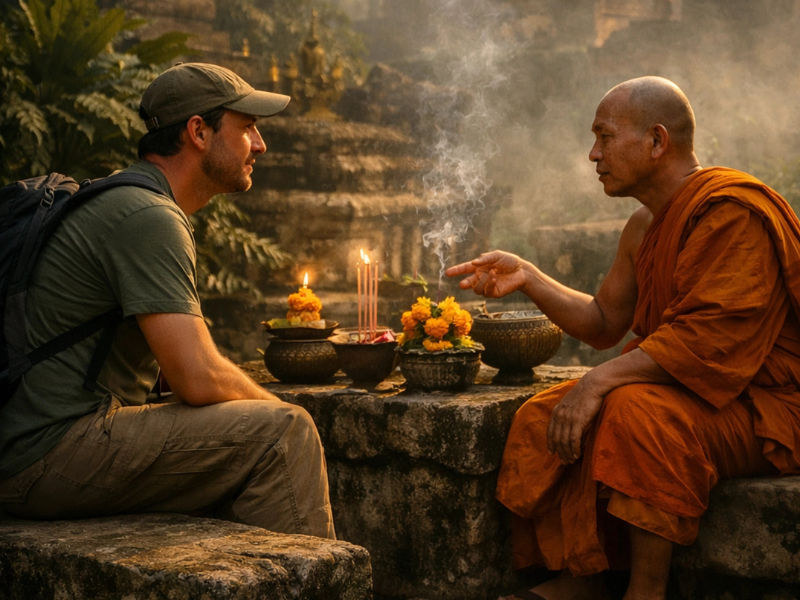
A vendor in Mexico explaining the lineage of a spice blend. A quiet craft studio in Kyoto where someone shows you the why, not just the how. A tea ritual in Cambodia that teaches you patience in a way you didn't know you needed.
That's not box-checking. That's remembering you're alive.
The best trips, the ones couples and families actually talk about years later aren't the ones with the longest highlight reel. They're the ones where something unexpected happened and you were present enough to feel it.
That's what intentional travel planning makes room for. And it's what I help couples and families find.
Ready to Stop Researching and Start Planning?
If you've made it this far, you already know what kind of traveler you are. You're not looking for a generic itinerary or a list of the most-reviewed restaurants. You want a trip that feels like you. One where the logistics are handled, the experiences are thoughtful, and there's room for something real to happen.
That trip is entirely possible. You just need a plan that's built around what actually matters to you.
If you're a couple or a family ready to move from overwhelm to clarity, I'd love to help you get there.
Here's where to start:
Book a free 30-minute discovery call. We'll talk about where you want to go, what matters most to you, and whether we're a good fit. No pressure, just a real conversation. Book your discovery call here
Download the free 3 Questions Guide — a simple starting point to help you get clear on what you actually want from your next trip, before any planning begins.Get your free guide here
Travel well. I'll help you get there.


Still Have Questions?
I’ve helped couples, families, and multi-gen groups plan meaningful trips to destinations around the world and I'd love to help you do the same.